
Start with what young people already show up for.
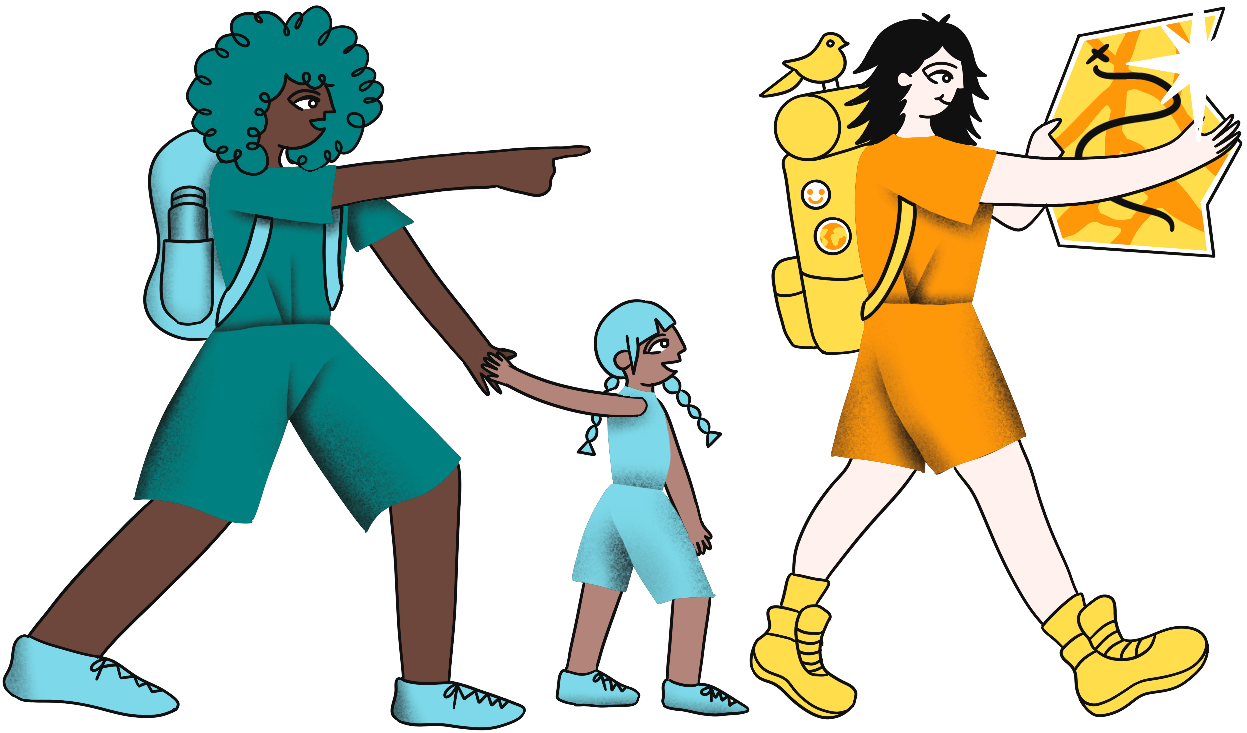
Most mental health programs ask young people to do something difficult before anything else has happened: walk through a door that announces what they're there for. For many, that's where it ends.

The programs reaching the hardest-to-reach young people have found a way around this. They don't advertise themselves as mental health support. They lead with surfing, football, skateboarding, climate action, art, music, martial arts — and build mental health skills into the experience from the inside. This page draws on interviews with practitioners doing exactly that, across South Africa, Colombia, Nepal, Ukraine, the UK, Jordan, Uganda, Zimbabwe, and beyond.
Make support an embedded layer.
When young people show up for surfing or football or climate advocacy, there is no clinical framing to push back against. They are simply there for the activity. And because the entry point carries no therapeutic label, the question of stigma doesn't arise in the way it would if the program were framed as counselling or mental health support from the outset.
That absence of framing is what creates the conditions for trust. Across these programs, practitioners describe trust as something that builds through consistency and shared experience — through regular contact with adults who remember what a young person said the previous week, who notice changes, and who follow up. Sinovuyo Fana, a coach at Waves for Change in South Africa, notes the importance of these “third spaces.”
Natalia Chumak, who runs psychosocial support programs in eastern Ukraine (and who Amna referred us to), describes a similar dynamic: "Even when we worked in shelters, we understood that people came not necessarily because they wanted to see a psychologist but because they had no one to talk to."
By the time something like a breathing exercise or an emotional check-in is introduced, it arrives within a relationship that has already been established around the activity. The mental health content does not need to be separately justified. It is experienced as part of something the young person has already chosen to join.
How it works:
No need to self-identify
Because the entry point is an activity rather than a service, young people can participate without framing themselves as someone who needs mental health support. In many contexts, the act of seeking help is itself a barrier, and not only because of stigma. It requires a young person to adopt a label that they may not be ready for or may actively resist. An activity-first design sidesteps that entirely.
A consistent space
What these programs offer in place of a clinical framework is structure. Across the programs featured here, practitioners describe the importance of a regular, predictable space, somewhere outside home, school, and the pressures of community life, where young people can build relationships with adults who are consistent and attentive. Sessions are carefully designed and follow a deliberate progression, but for the young person attending, the experience is closer to belonging to a group than receiving a service.
Impact that compounds
That consistency is also what allows impact to build over time. Practitioners describe behavior change as cumulative, the result of skills that participants carry into their daily lives and keep practicing over weeks and months. Lana Rolfe, CEO of School of Hard Knocks South Africa (a partner of EMpower), was initially skeptical that six sessions could produce measurable change. But twelve-month follow-up data showed that program effects continued to strengthen after the sessions had ended.

This has implications for both program design and evaluation. If the most meaningful effects emerge after a program has ended, short-term measurement may undercount what is actually happening. It also means content needs to be simple enough for participants to remember and apply without a facilitator present. The goal is not just engagement during the session — it is skills that travel.
Who delivers the work
The people matter as much as the program.
Across every program featured here, one factor is named again and again as central to why the approach works: the person delivering it. Coaches, facilitators, and community artists who come from the same communities as participants — who speak the same language, share cultural reference points, and have lived through similar circumstances — are described as critical to program success.
Deborah Diedericks of EMpower articulates the reasoning directly. A person who grew up in the same community, finished school, and now lives a different kind of life carries a message of hope that an outsider simply cannot.
At Waves for Change, coaches are aged 18 to 25 and drawn from the same under-resourced Cape Town communities as participants. Many are former program participants themselves. Sinovuyo Fana describes what this makes possible: "We are young. We have similar experiences to what the participants that we work with have had, but now we're equipped better as to how to deal with those kinds of challenging behaviors."
Grassroot Soccer, which has worked with adolescents across Sub-Saharan Africa for more than 20 years, builds this same principle into its program design. Charmaine Nyakonda, the organization's mental health specialist, says their near-peer coaches are able to connect with young people in ways that an older professional from outside the community often cannot.
At Artolution, all artists who facilitate programs are local people identified and trained from within the communities they serve. In the Rohingya refugee camps in Cox's Bazar, Bangladesh, all 20 facilitators are from the Rohingya community. Marine Burdel, Artolution's operations director, explains what this depth makes possible: "They know what their peers have come through, they know how to speak the language, they know the customs."
This has practical implications for organizations designing programs. It is not simply about hiring locally. It is about recognizing that the messenger is part of the message and that the credibility that comes from lived experience cannot be substituted with training alone.
What this means for your work:
Partner with spaces young people already use.
Across these programs, the entry point is an activity or gathering that already exists in the community. The implication for practitioners is that identifying where young people already congregate and building into those structures may be more effective than creating a new program from scratch and trying to recruit into it.
The people delivering the work matter as much as the content.
Each of the programs described here places significant emphasis on who delivers the intervention. Coaches and facilitators who come from the same community as participants, speak the same language, and have shared experiences are described consistently as central to why the approach works.
Tools need to work outside the session.
Practitioners say that the goal is not just engagement during the program but also skills young people can use when they're back in their homes, schools, and communities. This has practical implications for how content is designed — it needs to be simple enough to remember and apply without a facilitator present.
Safeguarding infrastructure needs to be in place before the work begins.
Several practitioners note that an activity-first approach builds trust relatively quickly and that trust leads to disclosure. Programs that open up these kinds of conversations need trained staff and clear escalation pathways in place before they begin.
